
Bonita Springs Root Zone Calculation for TPZ Fencing Compliance
In Bonita Springs, FL—especially in established areas like Spanish Wells, Pelican Landing, and the Old 41 corridor—accurate Critical Root Zone (CRZ) calculation is essential during construction near protected trees. Old 41 Fence Rentals provides TPZ fencing solutions that comply with local arboricultural standards, accounting for the region’s subtropical climate and dense tree canopy. Our guidance helps contractors and property owners meet city requirements while safeguarding mature vegetation common in neighborhoods built between 1980 and 2000.
How we calculate the TPZ before fence placement
We start every TPZ fence layout by reading the tree first, then the site. Around Bonita Springs, especially near Downtown Bonita Springs / Old 41, Spanish Wells, and Pelican Landing, we run into mature canopy trees sitting tight to drive aisles, sidewalks, and grading work. Javier learned after Hurricane Charley that a site gets chaotic fast, so we measure the root zone, mark the boundary, and set tree protection zone rentals outside that line. When the ground stays soft near the Imperial River, we also think about wind and footing, so the fence holds its line without crushing feeder roots. That’s how we keep crews moving and trees protected.
Calculation Steps
- Measure the root zone from the trunk out to the drip line before we set any fence line.
- Keep tree-protection panels outside the calculated TPZ so roots stay undisturbed.
- Use a layout that works around gates, walk paths, and equipment access without cutting corners.
- Anchor the fence with the right hardware for Bonita Springs ground conditions and storm exposure.
| Step | What we check | Why it matters |
|---|---|---|
| Measure trunk to drip line | We locate the outer root spread | That sets the practical TPZ boundary |
| Set fence offset | We place panels outside the zone | Roots stay clear of digging and compaction |
| Stabilize corners and gates | We match hardware to site access | Panels stay put through daily traffic and weather |
Calculating Root Protection Areas for Bonita Springs Projects
In Bonita Springs, TPZ fencing calculations start with measuring from the tree trunk to the dripline edge, typically adding a 3-5ft buffer for equipment clearance. Spanish Wells projects require accounting for mature live oaks with 40ft+ root spreads. Pelican Landing's preservation standards mandate double-layer fencing when working within 10ft of protected palms. Serrano's HOA requires stamped arborist reports for any root zone encroachment. All installations near Bonita Springs City Hall must use tree protection zones with wind-resistant panels anchored with concrete bases. Imperial Harbor developments often combine tree ordinances with SWPPP requirements for root zone preservation.
Key Terminology
- TPZ
- Tree Protection Zone per Bonita Springs code
- Critical Root Zone
- Soil area essential for tree survival
- Dripline Radius
- Perimeter defined by tree canopy edge
- Root Barrier Fencing
- Temporary fencing to prevent compaction
- Soil Aeration
- Maintaining pore space for root function
- Construction Exclusion Zone
- No-work area around protected trees
In Simple Terms
Measure from trunk to dripline, add buffer for equipment clearance
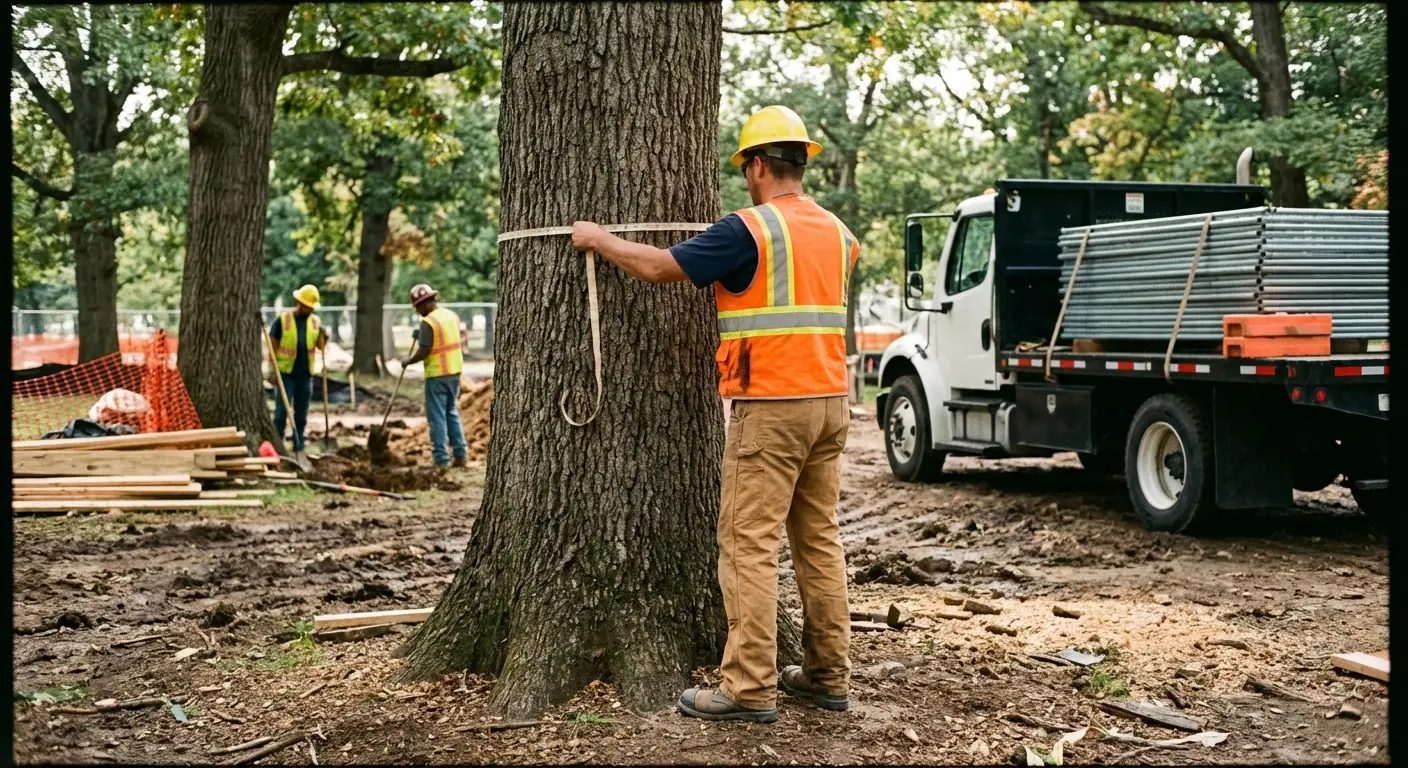
Root Zone Calculation for TPZ Fencing in Bonita Springs
Use trunk diameter, canopy spread, and site conditions to set TPZ fencing distances for Bonita Springs projects, including gated communities.
| Critical Root Zone (CRZ) radius | $85-$140 per tree radius calculation |
|---|---|
| TPZ fence setback distance | $120-$220 per tree |
| Tree trunk diameter measurement | $65-$110 per tree |
| Fence panel adjustment for root protection | $18-$32 per linear foot |
| Utility and irrigation conflict check | $95-$175 per site |
| Compliance layout for Bonita Springs parcels | $150-$260 per lot |
| Signage Interval | Every 30 linear feet |
TPZ Fencing Compliance Support
Contact Old 41 Fence Rentals for Bonita Springs site assessments.
Common Mistakes in Root Zone Calculation for TPZ Fencing
Root zone calculation for TPZ fencing in Bonita Springs demands precision to protect trees and comply with city codes. Avoiding typical errors saves delays and costly rework on sites in Serrano and Imperial Harbor.
Misjudging the Root Zone Radius
Underestimating the root zone radius risks damaging tree roots, causing long-term health decline and potential city code violations near Bonita Springs City Hall.
Measure tree trunk diameter carefully and apply the correct multiplier to define the root zone radius accurately before fence placement.
Ignoring Soil Conditions in Calculations
Overlooking soil type leads to improper fence anchoring and root zone disruption, especially in older neighborhoods with 1980-2000 era construction soils.
Assess soil compaction and moisture content on site to adjust root zone protection measures accordingly.
Failing to Account for Multiple Trees’ Overlapping Zones
Overlap miscalculations create gaps in protection, resulting in root damage and increased risk of fence instability in clustered areas like Serrano.
Map all nearby trees and calculate combined root zones before finalizing fence layout.
Using Temporary Fencing That Penetrates the Root Zone
Driving posts directly into the root zone causes irreversible root harm, complicating compliance and delaying project progress in Imperial Harbor.
Opt for post-driven fence rentals designed to avoid root disturbance or use base weights outside the root zone.
Neglecting Local Ordinance Updates on Tree Protection
Outdated knowledge leads to non-compliance with Bonita Springs regulations, risking fines and forced fence removal in Downtown Bonita Springs / Old 41.
Regularly review current tree protection ordinances and adjust root zone calculations to meet all local requirements.
Root Zone Calculation for TPZ Fencing: Compliance Guide
After Hurricane Charley, Javier Rodriguez saw how rushed fencing damaged trees and delayed recovery. At Old 41 Fence Rentals, we believe protecting root zones isn’t just code—it’s respect for Bonita Springs’ canopy. We get it up fast, so you can get back to work, but never at the cost of a tree’s health or your compliance standing.
-
Root Zone Integrity First
We calculate root zones based on actual tree canopy drip lines—not arbitrary setbacks—to protect live oaks and palms common in Bonita Springs. This ensures TPZ fencing avoids damaging critical root areas while meeting city arborist requirements.In PracticeAt a job near NCH Bonita Emergency Department, we adjusted panel placement to avoid a mature laurel oak’s root flare, using concrete-steel bases for stability without penetration.
-
Wind Load + Soil Match
Bonita Springs’ sandy soil and hurricane history demand precise anchoring. We pair root zone data with wind-load specs to choose between driven posts or weighted bases, preventing blow-overs during sudden storms.In PracticeIn Pelican Landing, we used wind-load-resistant panels with steel bases on a site with shallow roots and high exposure.
-
Zero-Trip, Zero-Damage Layout
Our crews map root zones before delivery, then stage panels with zero-trip bases that sit flush—no trenching or spikes near roots. This keeps pathways safe and trees undisturbed.In PracticeDuring a utility project in Downtown Bonita Springs / Old 41, we deployed tree protection zones without disrupting foot traffic or root systems.
-
Compliance Through Documentation
We log every root zone measurement, base type, and panel layout. This creates a clear audit trail for city inspectors and arborists—especially important in established neighborhoods like Spanish Wells with strict tree ordinances.In PracticeOur crew referenced tree protection ordinances and used modular panels to adapt on-site when an unexpected root cluster appeared.
We align every TPZ fence layout with Bonita Springs’ tree protection standards, using field-verified root zone data—not guesswork—to guide placement, anchoring, and access.
TPZ Root Zone Fencing Compliance in Bonita Springs
Field-tested answers for tree protection zone fencing in Imperial Harbor, Spanish Wells, and Old 41 districts.
What is the TPZ root zone calculation method used in Bonita Springs?
Bonita Springs follows the DBH method, measuring trunk diameter at breast height near Imperial River to determine protected root zones.
How does Spanish Wells' gated community affect TPZ fencing installations?
Spanish Wells HOA requires additional permit reviews for TPZ fencing due to protected mature oaks along community roadways.
Are there different root zone rules for Downtown Bonita Springs' historic trees?
Old 41 district enforces 1.5x standard TPZ radius for designated heritage live oaks near the Imperial River basin.
What tools does Old 41 Fence Rentals use for accurate root zone measurement?
We use laser dendrometers certified by Lee County Arborist Board for precise DBH readings in Imperial Harbor properties.
How do 1980s-era developments impact current TPZ compliance in Bonita Springs?
Post-1980 subdivisions like Spanish Wells planted trees closer to property lines, requiring creative fencing solutions to meet modern TPZ standards.
Does the Imperial River watershed area have special TPZ fencing requirements?
Riparian buffer zones near Imperial River mandate extended TPZ protection areas with non-invasive anchoring systems for temporary fences.
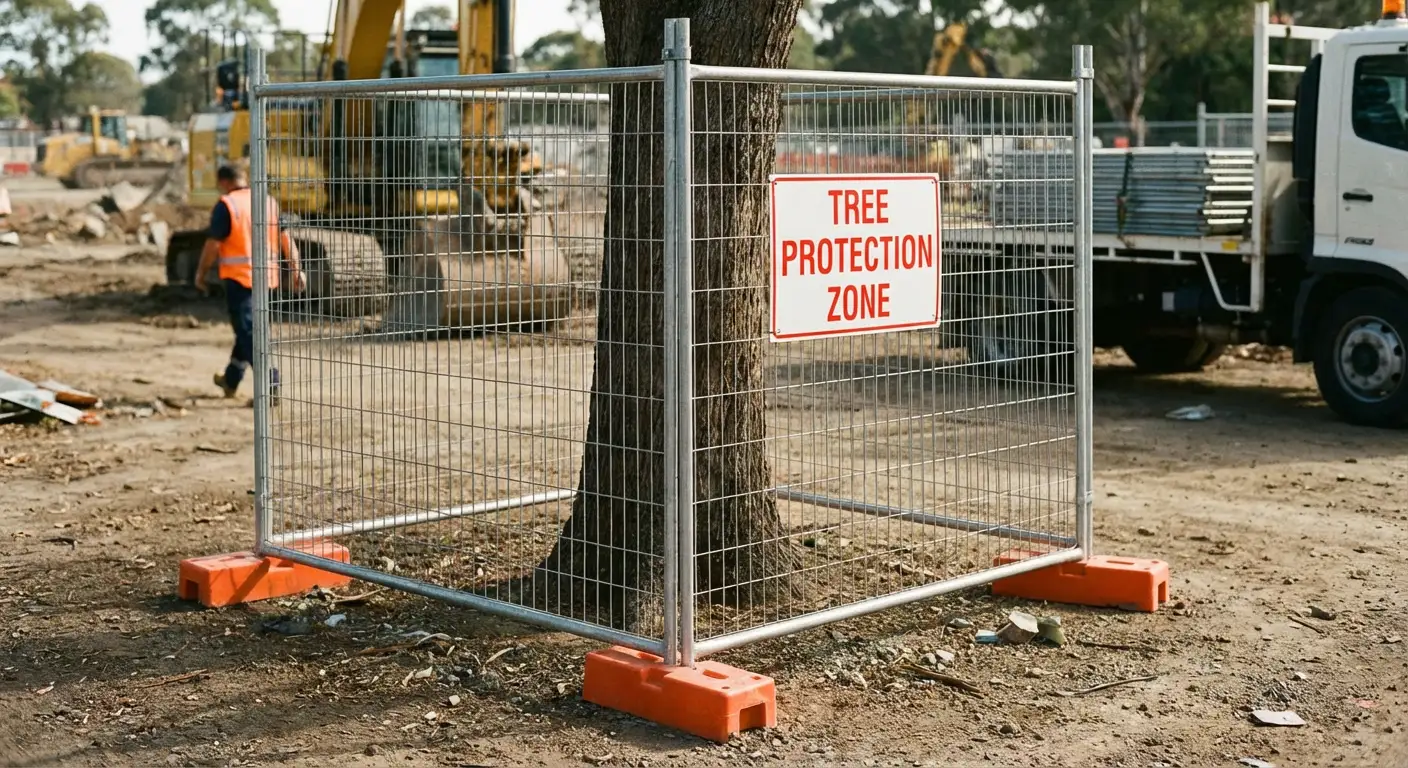
Root Zone Calculation for Temporary Project Zones
Technical guidance for precise TPZ fencing requirements in construction and development projects across Southwest Florida infrastructure sites.
OSHA-aligned temporary fencing solutions for complex construction zone management protocols